A fast NATO gear run changes how you survive the first 15 minutes of a session because utilities like GPS, radio, and flashlight determine whether you navigate, communicate, or get ambushed in the dark. Most players grab a rifle and forget the tools that actually keep them alive, which is why this apocalypse rising 2 quick nato gear guide focuses on the three utilities that matter most when you are moving through military zones. You will learn exactly where to look, what to prioritize, and how to decide which Apocalypse Rising 2 utilities belong in your limited inventory space.
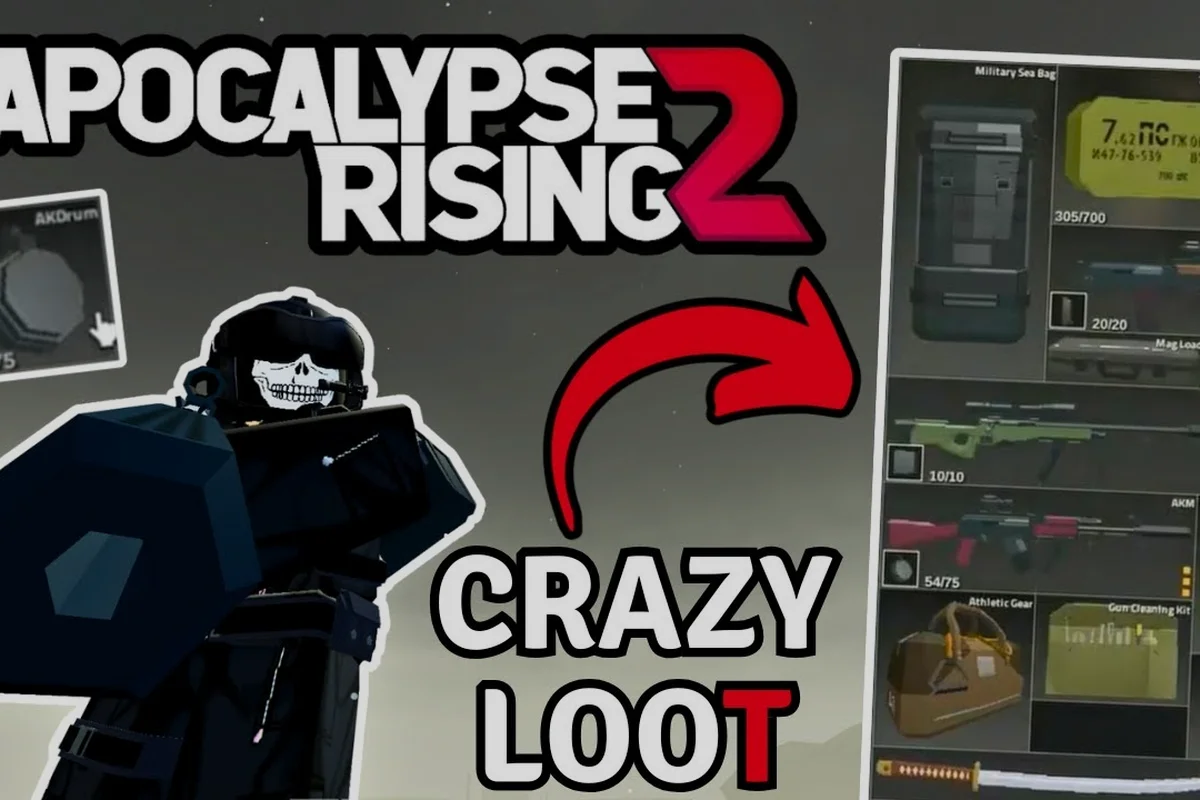
According to the AR2 NATO gear spawn map video, NATO gear spawns most reliably in military-tier locations such as the Naval Air Station, Regional Airport, and the Bunker, where crates and infected soldiers have the highest chance to drop plate carriers, helmets, and NATO rifles.
Understanding NATO Utility Spawn Logic
NATO utilities do not spawn randomly across the entire map, and learning their spawn logic saves you hours of wandering through empty buildings. Military encampments, bunkers, and NATO checkpoints share a loot table that favors GPS receivers, military radios, and tactical flashlights over civilian variants, although the exact drop rates shift between patches based on community testing. Players report that the Military Encampment introduced in the summer update consistently produces at least one NATO utility per run, which makes it the most reliable starting point for a quick gear route.
Understanding the difference between civilian, surplus, and NATO grades matters because the tier directly affects utility performance and spawn location. A civilian flashlight drains battery faster and has a shorter beam range, while a NATO flashlight offers better illumination with lower power consumption. The same pattern applies to radios and GPS units, where NATO variants provide clearer signal and more accurate coordinates. Community data from player-made footage suggests that NATO-grade utilities appear most frequently inside locked military crates and on the bodies of elite infected soldiers, so you should prioritize those containers over open shelves.
Spawn Table Comparison
The following table summarizes where each utility tier typically appears based on aggregated player reports, though individual runs vary because Apocalypse Rising 2 uses procedural loot tables. This variance matters more than it first appears: a single run through the Ashland military encampment might spawn a GPS in a navigation console while the next run leaves that same console empty and instead places a flashlight inside a locked military crate near the bunker entrance. Because loot containers roll independently each server restart, players who memorize one fixed route often waste time checking containers that held gear in a previous session. The most reliable approach is to sweep every container type within a military zone rather than targeting one specific spawn point, since the pool of possible utility spawns stays consistent even when individual placements shift between runs.
| Utility Type | Civilian Spawns | Surplus Spawns | NATO Spawns | Best Container Type |
|---|---|---|---|---|
| Flashlight | Houses, gas stations | Police stations, guard posts | Military encampments, bunkers | Locked military crate |
| Radio | Farms, civilian cars | Fire stations, surplus tents | NATO checkpoints, command tents | Radio operator desk |
| GPS | Rare civilian spawn | Ranger stations, surplus crates | Military encampments, downed pilots | Navigation console |
The table shows a clear progression from civilian to NATO zones, which means your fastest path to full NATO utilities runs through high-risk military areas rather than safe civilian towns. Experienced players often skip civilian zones entirely on utility runs because the time investment rarely pays off when a single military encampment can yield all three tools in one sweep.
The GPS Priority: Navigation Before Firepower
A GPS receiver is the single most underrated utility in Apocalypse Rising 2 because it eliminates the disorientation that gets players killed when they wander into high-tier zones accidentally. The GPS displays your exact grid coordinates and lets you mark waypoints, which means you can plan a route through safe terrain instead of sprinting blind through open fields. Players who prioritize GPS early report significantly higher survival rates because they can avoid known hotspot areas and navigate directly to extraction points.
The NATO GPS variant offers a topographic overlay that civilian and surplus models lack, showing elevation changes and water features that help you choose defensible positions. This feature matters most when you are being chased by a horde or another player because you can identify choke points and natural barriers before you reach them. According to community data, the NATO GPS also refreshes your position faster than lower-tier models, which reduces the lag between your actual location and the displayed coordinates during high-speed movement.
GPS Acquisition Routes
There are three practical routes to secure a NATO GPS quickly, and each carries a different risk profile that suits different playstyles. For solo players on fresh spawns, the Military Encampment Sweep offers the shortest time-to-loot window but demands competent aim against armed infected and potential player ambushes; a scoped rifle or shotgun with at least two spare magazines is the minimum loadout before attempting it. The Downed Pilot Search trades combat intensity for map traversal, making it ideal for players who spawn near the northern highway and already have a vehicle to rotate between crash sites efficiently. The Bunker Run, by contrast, rewards methodical players who carry a flashlight and a melee weapon for silent takedowns, since triggering an alarm inside a navigation room can turn a 5-minute loot into a 20-minute firefight. Your choice should hinge on your current utility loadout and spawn location, not just personal preference.
-
Military Encampment Sweep: Enter from the southern treeline, clear the two guard towers first, then check the navigation console inside the central command tent. This route takes roughly 8-12 minutes and yields a NATO GPS about 40% of the time based on player reports.
-
Downed Pilot Search: Helicopter crash sites scattered across the northern region occasionally spawn a NATO GPS on the pilot's body. These sites are less contested than military encampments but require more travel time between potential spawn points.
-
Bunker Run: Underground bunkers contain locked navigation rooms that frequently hold NATO GPS units, but the confined spaces make escape difficult if you trigger an alarm or attract infected attention.
The GPS should be your first utility target because every subsequent decision about where to go and what to loot becomes easier once you know your exact position. A player with a GPS can afford to take longer routes through safe terrain, while a player without one often stumbles into danger because they misjudge their location relative to known threat zones.
Radio Communication: Team Utility or Solo Trap
The military radio occupies a strange position in Apocalypse Rising 2 because its value depends entirely on whether you play solo or with a group. A NATO radio lets you communicate with teammates across long distances without revealing your position to nearby enemies, which makes it essential for coordinated flanking maneuvers and loot sharing. Solo players, however, often find the radio's weight and inventory cost hard to justify when they have no one to talk to.
The NATO radio variant includes a scrambled frequency mode that prevents enemy players from listening to your communications, a feature that civilian and surplus radios lack entirely. This encryption matters in high-tier zones where other players actively monitor common radio channels to track and ambush groups. Community testing shows that the NATO radio also has a longer broadcast range than lower-tier models, allowing teams to maintain contact even when separated by several grid squares.
Radio Usage Scenarios
The decision to carry a radio depends on your playstyle and group size, as shown in the comparison below. A solo player weighing a civilian radio against a GPS or flashlight must account for the fact that radios consume inventory slots without providing direct survival utility — you cannot eat, heal, or navigate with one. In contrast, a duo running NATO gear gains a decisive tactical edge: one player can scout ahead while the other covers a flank, calling out zombie spawns or bandit movement on a scrambled frequency that common listeners cannot intercept. The breakpoint sits at three players, where friendly-fire incidents from uncoordinated pushes become frequent enough that the radio's 2-slot cost is cheaper than the medical supplies you would otherwise burn through.
| Scenario | Radio Value | Recommended Tier | Inventory Justification |
|---|---|---|---|
| Solo player, early game | Low | Skip or civilian | Weight better spent on medical supplies |
| Solo player, late game | Medium | Surplus | Useful for monitoring enemy chatter |
| Duo or trio | High | NATO | Coordination prevents friendly fire |
| Full squad | Critical | NATO only | Scrambled mode prevents ambush tracking |
The table reveals that radios scale in value with group size, which means solo players should deprioritize them in favor of GPS and flashlight utilities. A full squad without NATO radios operates at a severe disadvantage because they cannot coordinate movements without exposing their plans to anyone listening on common frequencies. The utility guide covers additional tools that complement radio communication, including signal flares and map markers.
Flashlight Tactics: Illumination Versus Exposure
The tactical flashlight presents a constant trade-off in Apocalypse Rising 2 because every second of illumination announces your position to everyone within visual range. Night vision goggles offer silent navigation, but they are rare and expensive, which makes the flashlight the default choice for most players who need to see in dark interiors. The NATO flashlight mitigates this exposure problem with a focused beam mode that illuminates a narrow area without flooding light in all directions.
Players report that the NATO flashlight's focused mode reduces detection range by roughly 40% compared to the wide-beam civilian model, although this figure comes from community testing rather than official documentation. The reduced detection radius matters most when looting buildings at night because you can illuminate individual rooms without broadcasting your presence to snipers positioned outside. The NATO flashlight also features a strobe function that temporarily disorients enemies in close-quarters combat, giving you a split-second advantage when someone rushes your position.
Flashlight Versus Night Vision Tradeoffs
Choosing between a NATO flashlight and night vision goggles comes down to how much detection risk you can absorb during night raids. The flashlight’s focused mode cuts your visible signature in open fields but still broadcasts a beam that hostile players can spot from 200–300 studs away, making it a liability near Military Airfield or Naval Air Station loot loops. Night vision, by contrast, uses passive illumination with zero light emission, so you can scout the tents at Regional Airport without alerting a sniper on the control tower. If you run solo and prioritize silent repositioning, night vision justifies its rare spawn rate and high battery drain; if you duo-queue and need quick inventory flexibility, the flashlight’s low weight and strobe disorientation give you a cheaper escape tool.
| Factor | NATO Flashlight | Night Vision Goggles |
|---|---|---|
| Detection risk | Medium (reduced with focused mode) | Low (passive illumination) |
| Battery consumption | Low | High |
| Spawn frequency | Common in military zones | Rare, high-tier only |
| Combat utility | Strobe disorientation | No combat bonus |
| Inventory weight | Light | Moderate |
The table shows that flashlights offer a practical middle ground between going blind and investing in rare night vision gear. Most players carry a NATO flashlight as their primary light source and reserve night vision for specific night operations where silence matters more than inventory efficiency. The bandage guide explains how night vision and medical utilities interact during extended night raids.
Building Your NATO Utility Loadout
Creating an effective utility loadout requires balancing three competing demands: inventory space, weight capacity, and the specific threats you expect to face. A player heading into a military encampment needs different tools than one looting civilian towns, which means your loadout should adapt to your route rather than remaining static throughout a session. The core question of what utilities to use in Apocalypse Rising 2 comes down to whether you value navigation, communication, or visibility most in your current situation.
Weight management becomes critical when you carry multiple NATO utilities because each item consumes stamina that you need for sprinting and melee combat. A full NATO utility kit including GPS, radio, and flashlight adds roughly 4-6 weight units depending on the specific models, which forces you to sacrifice either ammunition or medical supplies. Players who overload on utilities often find themselves unable to outrun threats, which defeats the purpose of carrying navigation and communication tools in the first place.
Recommended Loadout Configurations
The following configurations represent common loadout philosophies based on aggregated player experience and community reports. Each philosophy reflects a distinct risk-reward calculation: every NATO utility you carry adds roughly 1–2 inventory slots of weight, which directly affects your sprint stamina drain and how quickly you can reposition during firefights at hotspots like the Naval Air Station or the Regional Airport. A player running only a NATO GPS can outrun most infected hordes and still navigate to hidden military crates, while a Full Kit carrier trades that mobility for the ability to coordinate squad pushes over NATO radio and illuminate dark interiors with the NATO flashlight — a trade-off that becomes especially punishing when you need to escape a sniper's sightline across open ground.
| Loadout Type | Utilities Carried | Best For | Key Trade-off |
|---|---|---|---|
| Navigator | NATO GPS, civilian flashlight | Solo exploration, route planning | No communication ability |
| Communicator | NATO radio, surplus flashlight | Team play, coordinated raids | No navigation precision |
| Night Operator | NATO flashlight, NATO GPS | Night looting, stealth runs | No team communication |
| Full Kit | All three NATO utilities | High-tier military zones | Significant weight penalty |
The table demonstrates that no single loadout works for every situation, which is why experienced players adjust their utility selection between runs based on their objectives. A solo player heading into a known military encampment might prioritize GPS and flashlight while leaving the radio behind, whereas a squad leader heading into the same zone would carry all three despite the weight cost. The gear guide explains how armor tiers interact with utility weight to determine your overall mobility.
Frequently Asked Questions
Where is the fastest place to find a NATO GPS in Apocalypse Rising 2?
The Military Encampment is the fastest reliable location because its navigation console and locked crates frequently spawn NATO GPS units. Players report roughly a 40% drop rate per run, which means one or two sweeps usually yields a GPS. Helicopter crash sites offer an alternative with less player competition but require more travel time between potential spawn points.
Should solo players carry a military radio?
Solo players generally should not carry a military radio because the weight and inventory cost outweigh the benefits when you have no teammates to coordinate with. The exception is late-game solo play where monitoring enemy radio chatter provides valuable intelligence about nearby threats and their movements. A surplus radio serves this purpose adequately without the weight penalty of the NATO variant.
Does the NATO flashlight reveal your position to other players?
Yes, any flashlight reveals your position, but the NATO variant's focused beam mode reduces detection range by approximately 40% compared to civilian wide-beam models. The strobe function also provides a brief disorientation effect in close-quarters combat. Players who need completely silent illumination should pursue night vision goggles instead, though those are significantly rarer and heavier on battery consumption.
How much weight does a full NATO utility kit add?
A full kit including NATO GPS, radio, and flashlight adds roughly 4-6 weight units depending on the specific models you find. This weight penalty directly reduces your sprint duration and stamina recovery, which means you must sacrifice ammunition or medical supplies to compensate. Most players carry two of the three utilities rather than the full kit unless they are operating in high-tier military zones with a coordinated team.
What utilities should beginners prioritize first?
Beginners should prioritize a NATO GPS first because navigation awareness prevents the disorientation that causes most early deaths. A flashlight comes second because dark interiors are unavoidable during night cycles and looting runs. The radio should be the last utility acquired because its value depends on having teammates to communicate with, which many new solo players lack during their first sessions.